



Xátiva is synonymous with abundance: for its rich history and for its enormous cultural and gastronomic influence.
It is a small city, with almost 30,000 inhabitants, perhaps little known internationally, and even in Spain itself, but it is a city with a very small population. hides legends and historical treasures that marked life on the peninsula.
Because of its strategic position at the foot of a mountain massif, many ancient peoples have wanted to take it over.
History of Xátiva
From the Iberians to the Greeks, from the Phoenicians to the Romans, but it reached its greatest splendour in the Muslim period.
During this period, an important paper industry developed, producing rice paper and the first rice mill in Europe was created.
It has always been a pioneer:
Culture and Knowledge Styles has seen the passing of numerous intellectuals and poets such as: Ibn Hazm author of »El collar de la Paloma», one of the most important works of love poetry in Spanish literature or "El collar de la Paloma". Ibn Jubair called the Spanish Marco Polo for his books full of adventures and travels around the world.
It is considered one of the most important cities of the ancient Kingdom of Valencia, even almost as influential as Valencia itself.
And it was the birthplace of two of the Borgia Popes Calixtus III (from 1455 to 1458) and Alexander VI (from 1492 to 1503) of whom you can see the bronze statues at the entrance of the Collegiate Church of Santa Maria.
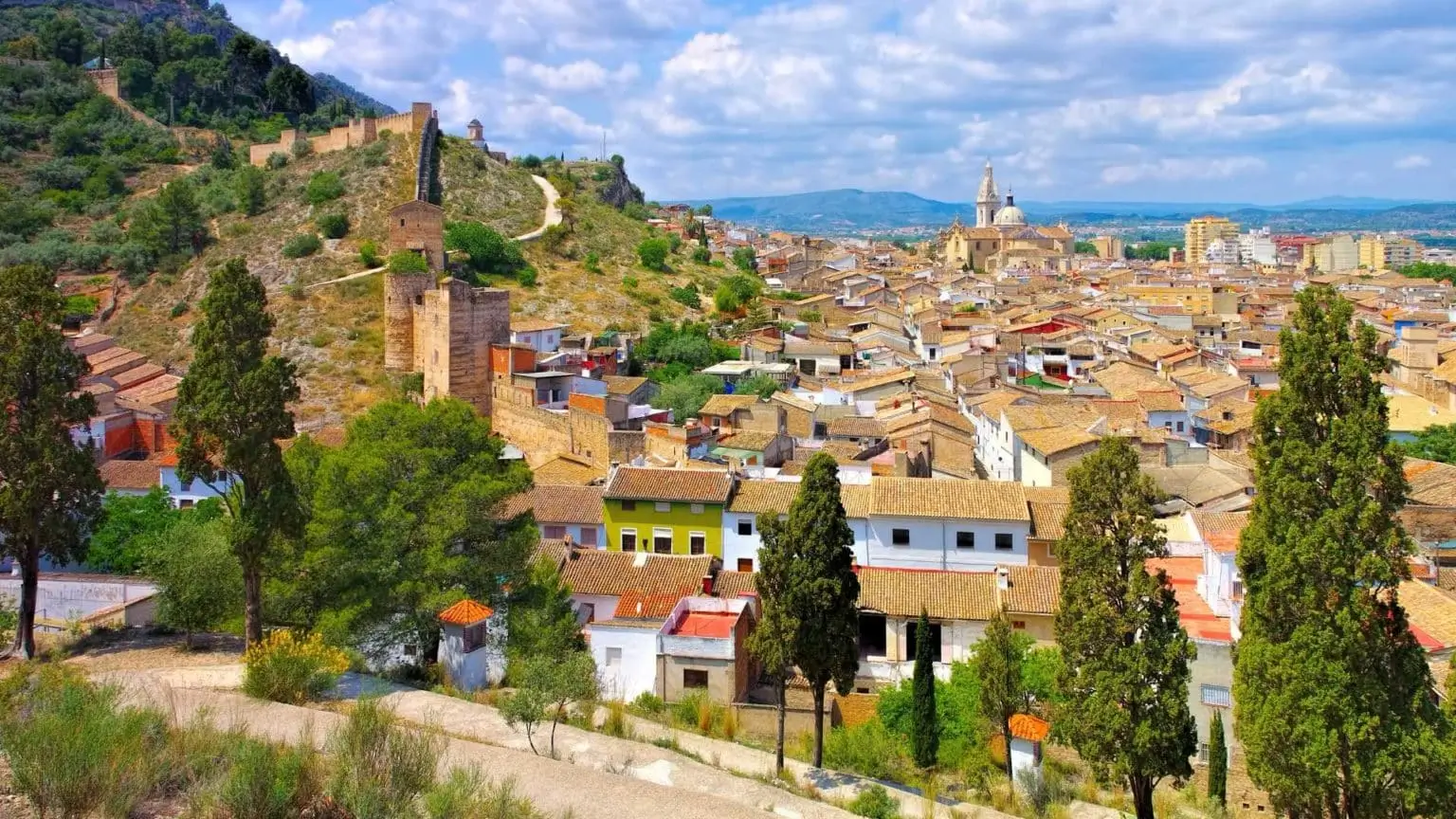
But there is no doubt about its great attraction, perfectly preserved today, is the castle at the top of the city., which are actually two castles that have been joined together over time and have made this city one of the most impenetrable city walls ever seen.
The castle of Xàtiva
Divided thus into two parts built at different points in history, we find:
- The Lesser Castell: of Iberian construction was the original of this imposing fortress.
Here was born the son of the great Carthaginian general Aníbal Barca and his Iberian wife Himilce in 218 BC, who was the protagonist of the famous story of the journey with the elephants: he crossed the Pyrenees and then the Alps to reach Rome and defeat it.
- El Castell Major: was built in the medieval times and it is at a higher altitude so that the views are breathtakingThe city of Xàtiva can be seen to the north together with the wonderful river Júcar; looking south we find the famous mountain ranges of Mariola, Grossa and Benicadell; to the west the border with the community of Castilla la Mancha and to the east even on a clear day you can see the Mediterranean sea.
The latter, after the Christian reconquest by Jaume I became the main fortress on the road between Castile and the capital of the Kingdom of Valencia. and was used as a state prison of the former Crown of Aragon.
Both castles are linked across the ridge by a rampart that formed part of the city's defensive belt.
Do you understand now why it was a key place that everyone wanted to conquer?
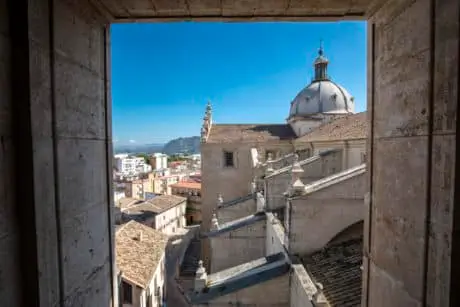
comunitatvalenciana.com - Collegiate Church Basilica of Santa Maria, La Seu, Xàtiva
Monumental wealth
But the castle is not the only thing that surprises us about the city...
If you come down from the fortress, you will find the Church of Sant Feliu, the oldest, completed in 1269.
Once you pass through the church, you enter the so-called Historic-Artistic Site, which is the old quarter of Xàtiva.
The call: city of a thousand fountains, It is home to monuments of all types and periods: towers, churches, palaces, fountains, noble houses...
The city's streets have been walked through by the upper middle-classes in all their luxury, wrestlers, artists and thinkers, and it has a diversity of forms and cultures that makes it even richer.
As monuments to highlight and that you will be able to visit with us are the Collegiate Church the great church, and l'Almodí which is a building that was used as a wheat exchange and today has been converted into an archaeological and fine arts museum. Can you imagine what you can find there? If you like history, in this building you can discover still-preserved jewels of antiquity.
At l'Almodí a passage from history unfolds in the form of a tragedy for Xàtiva:
During the War of the Spanish Succession, the throne was between Philip V of Bourbon and Archduke Charles of Austria.
The Valencian people supported Charles of Austria and so Philip set fire to the city, destroying it almost completely, so in revenge, the people hung the portrait of Philip that you can find in the Museum of Fine Arts upside down (and so it goes on and on!).
Curiosities of Xátiva
August Fair
The August Fair is one of the most relevant celebrations in the region, declared as such Festival of National Tourist Interest which takes place from 14 to 20 August.
It started out as a livestock fair and although they continue to hold competitions about it, it has moved into the background, now being a cultural milestone: markets, performances, parades and events centred on dance, art and song. As in The Night of the Albaes: which is a traditional Valencian song of ancestral origin. That night the singers gather in the Plaza de Sant Pere to compete in a singing tournament.
Also very interesting is the Fiesta del Motociclismo: which is the oldest street circuit motorcycling competition in Spain. where millions of fans come with their motorbikes from all corners of the country. It has been held continuously since 1951.
They also celebrate the Festival de la Cançó: disseminating traditional Mediterranean music, so that it is not lost.
And the medieval market is very famous in the area, with handmade products of all kinds: food, gadgets...
Xàtiva is colour, music, tradition... it is spectacle, with its wide variety of tournaments for all ages, that week is the queen of dance.
Dream gastronomy
This is where the baked rice, not as well known as paella but just as tasty or even tastier, the arros amb fessols i naps and l'arnandí which is a typical sweet.
Endless routes in the heart of nature
It has the largest number of natural sites in Spain, 26 in total.
Of which, of course, the Borja route and the Cova Negra Natural Site.
The Giant Nativity Scene
At Christmas you can see the country's largest life-size nativity scene in person, a real treat.